
Embracing Participatory Art
in Digital and Online Settings
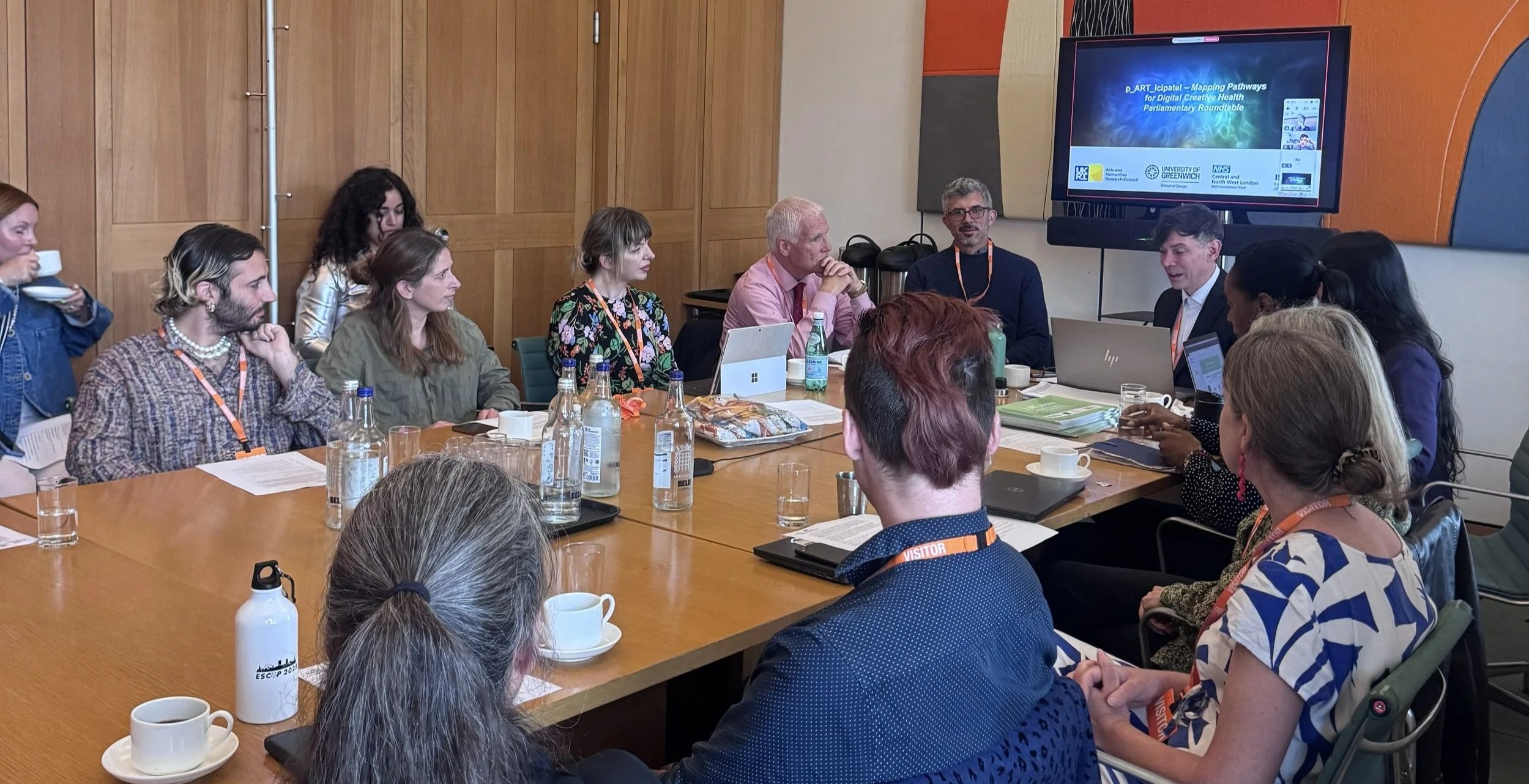
p_ART_icipate is a multi-sector consortium which advances digital creative health through participatory arts, promoting ethical, accessible and inclusive frameworks for digital participatory arts. We bring together expertise from participatory arts, the NHS, public health, research, XR and immersive technologies, community practices, and lived experience.
The consortium supports the national conversation around the implementation of the 10-year Health plan for England, particularly its three strategic shifts: ‘from hospital to community, from analogue to digital, and from sickness to prevention of ill health’. We share a values-led approach focused on how these practices are led by co-creation, participatory practices, safe spaces, acknowledgement of authorship, inclusion, co-production, ethics and accessibility.
Building on co-designed guidelines for accessible and ethical participatory arts in digital and online settings, p_ART_icipate is contributing to the national discourse on creative health policy, research and practice by combining sector knowledge on design and facilitation with evidence-informed approaches. We support evidence-informed approaches that recognise both measurable outcomes and the relational, cultural, aesthetic and ethical processes through which digital creative health practices generate change.
Through roundtables, policy dialogue, research collaboration and practical guidance, the consortium works to strengthen the conditions for digital creative health to flourish. Our aim is to ensure that participatory digital arts are treated both as tools for engagement with research- and evidence-based approaches to policy development and as relational, creative and ethical practices that can contribute meaningfully to prevention, community wellbeing, and more inclusive models of health.
ARTWORKS

Click the image above to explore our artwork KIMA: Colour. You will be able to interactively explore a project that turns paintings into sound, designed for the visually impaired.
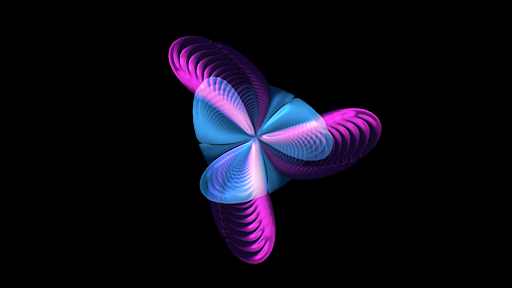
Click the image above to explore our artwork Zeitgeist. You will be able to view a video about a project to visualise ‘flow’ states, in the hope of helping people be more creative together.

Click the image above to explore our artwork KIMA: Voice. You will be able to explore an interactive artwork that enables people to sing together online, developed with people with access needs.

Click the image above to explore our artwork KIMA: Noise. You will be taken to a page where you can stream your own sounds and participant in a virtual soundwalk.
Explore our findings.
Throughout the p_ART_icipate! project, we learned a lot about the process of creating and facilitating participatory artworks in a digital setting. Explore our academic outputs here.

Developing guidelines for digital participation.

Understanding the role of facilitation and onboarding.

Working with others: particpants, stakeholders and gatekeepers.